Established to recognise NUS-ISS Graduate Diploma in Systems Analysis (GDipSA) learners who demonstrate strong technical capabilities, innovation, and the practical application of learning to solve real-world challenges, the Accenture Prize for Best Industrial Attachment Project shines a spotlight on projects with meaningful industry impact.
At the recent Industrial Attachment Project Presentation, three finalists from the GDipSA 60th cohort showcased internship projects spanning finance, defence, and healthcare automation, applying what they had learnt as they vie for this year’s prize.
Addressing the finalists, Mr Khoong Chan Meng, CEO of NUS-ISS, highlighted how each student had grown in different ways throughout the programme. “What stands out to me is how each of you has combined your past experiences with what you’ve learned here. That growth is something to be proud of. More importantly, this is just the beginning. Continue building on these experiences as you pursue the next chapter of your careers and studies,” he said.
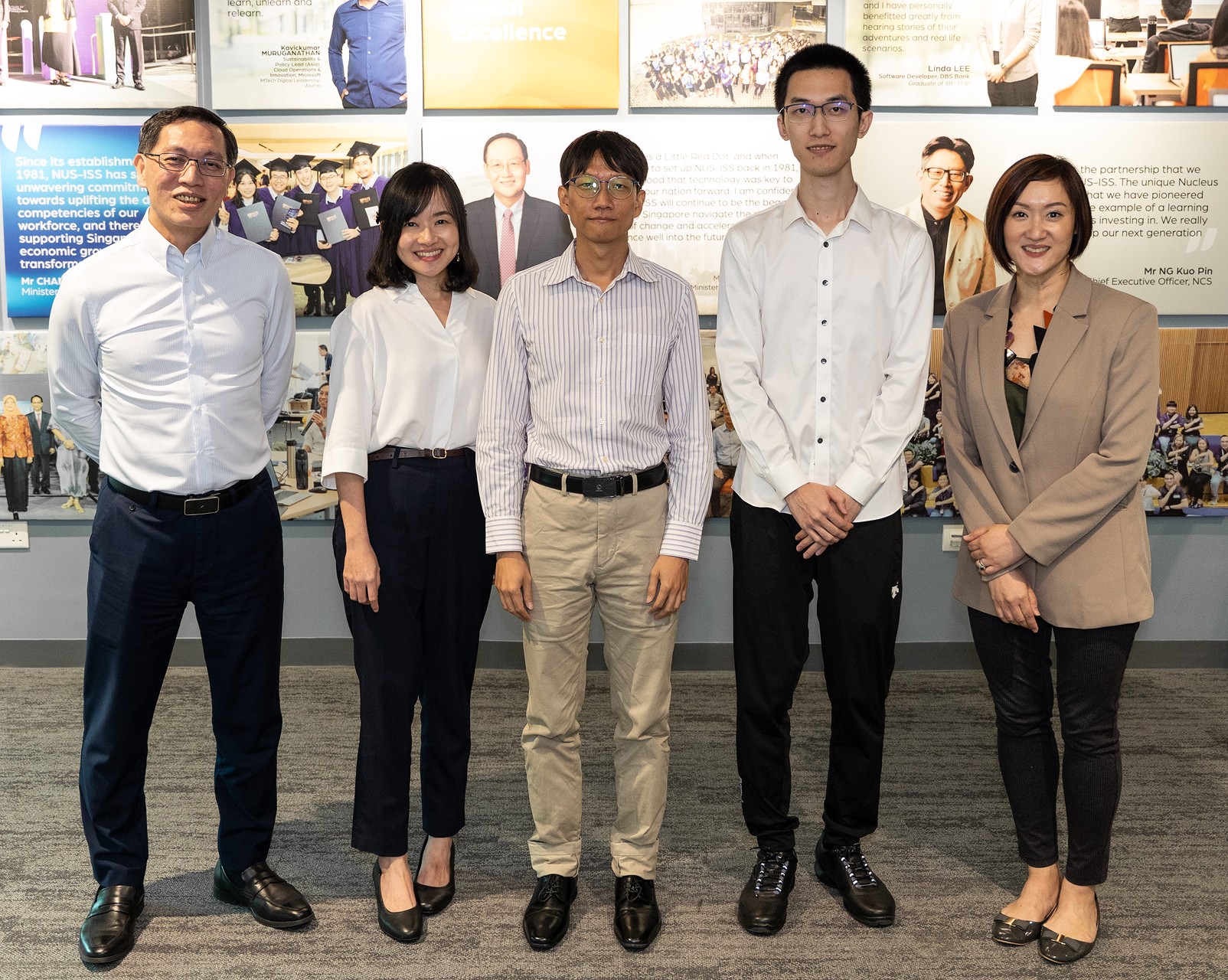 The three GDipSA student presenters at the Accenture Industrial Attachment Project Presentation with our judges. From L to R: Mr Khoong Chan Meng, CEO, NUS-ISS; Ms Gong Yuan; Mr Aung Myin Moe; Mr Li Xingbang and Ms Denise Lin, Managing Director, Health & Public Service, South East Asia, Accenture.
The first to present was Ms Gong Yuan, whose project focused on strengthening approval workflows for the financial services sector. Her team developed a digital solution that helps organisations strengthen governance, reduce operational risks, and improve accountability.
In a vastly different field, Mr Aung Myin Moe explored how drones could recognise nearby flight behaviours and coordinate tasks in communication-limited environments, a project rooted in the defence research space.
Meanwhile, Mr Li Xingbang looked into autonomous mobility solutions for healthcare and industrial settings, exploring how wheeled equipment, such as medical carts, could move more intelligently and independently.
Among the finalists, it was Myin Moe’s project that ultimately impressed the judges.
During his five-month internship at the NUS Centre for Flight Sciences at the Temasek Laboratories, he worked independently on the research project, taking ownership of every stage of the process, from exploring solutions to testing and refining different approaches.
As he navigated the uncertainties of a research-driven project, he discovered that technical progress often required a shift in perspective. “One thing I learned was that instead of forcing small changes, it’s more effective to step back, look at the bigger picture, and rethink the approach,” he said.
His thoughtful approach and depth of experimentation earned him this year’s Accenture Prize for Best Industrial Attachment Project.
Reflecting on the winning project, Ms Denise Lin, Managing Director, Health & Public Service, South East Asia, Accenture, shared that what stood out was “the amount of thought and effort that went into how he developed the model, refined it, and considered different goals.”
What began as an internship has since evolved into a career opportunity. Myin Moe was offered a full-time position as an Associate Scientist, allowing him to continue the work while deepening the technical and research skills developed during the attachment.
The experience was about more than completing a project or winning an award. It was about learning to navigate uncertainty, apply new skills to meaningful problems, and build the confidence to thrive in an ever-evolving tech landscape. Ready to explore where a future in tech could take you? Learn more about the NUS-ISS Graduate Diploma in Systems Analysis here.