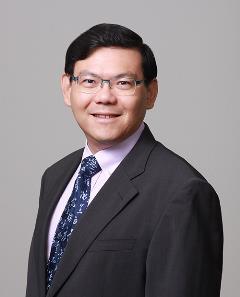
 “There’s a lot of baggage attached to the term ‘Continuing education’,” said Dr. Leong Mun Kew, Director, Graduate Programmes at NUS-ISS.
“It’s not a new concept – Continuing Education has been around for a long time. Traditionally, people get a degree, work for a long time till they become obsolete, and then only do they think about getting another degree,” he explained. But in a rapidly changing digital economy, it is detrimental to wait till one becomes obsolete before starting to learn new skills.
As labour markets evolve, so do the demands on the education system. There is a need to redesign the educational pathways to more effectively meet the needs of industries and organisations and also that of their employees.
This is where stackable credentials come in. A certificate comprises a series of courses and assessments that together ensure that the learner gains a job skill (for new entrants) or deepens an existing capability (for in-service job holders). As learners go through the courses, they are expected to practice the skills either in their workplace or through addressing real world problems. Thus each certificate is a recognition of the knowledge and skills that an individual has acquired. This approach enables Professionals, Managers and Executives (PMEs) to enrich and upskill themselves without disrupting their careers. Additionally, the certificates will stack to formal qualifications such as a Professional Diploma, a Graduate Diploma, or a Masters degree.
“However, it is also important to differentiate the different ways of putting together stackable degrees,” Mun Kew said. “The easiet way is to take an existing degree, divide it into modules, that let those modules stack to form that degree. That approach sounds very much like old wine with new labels. Another way is to take a bunch of existing modules and giving a formal qualification to some combination of these modules,” he explained.
NUS-ISS, on the other hand, is suggesting an entirely different model that begins with a unique mindset – of throwing out the idea of a degree as the basic unit of education. Those should instead be modular certificates.
“We are not so much interested in the degree because the end goal of education should never be a piece of paper. Rather, the fundamental principle in Continuinous Education at NUS-ISS is modular skills,” he emphasised. “Our goal is to prepare new entrants for a job role, as well as to equip in-service job holders with deeper skills. To either ends, what the employees need (and what their employers want) are the skills to enable them to carry out their work, not the degree certification.” An education programme has three outcomes, only one of which is the qualification. The 2nd and possibly most important outcome is a portfolio of practice anchored in the real world that demonstrates competency. After all, when one goes for a job interview, you don’t discuss your degree, you talk about what you’ve done! The 3rd outcome are the endorsements and feedback from peers and supervisors. So certificates do stack to degrees but even if a learner stops after one certificate, he or she has gained skills valuable for their current job. And it’s possible to take certificates belonging to different degrees; these give a broad and holistic education allowing the emergence of transdisciplinary skills not found in single specialisation.
Multiple entry and exit points to cater for individual learners
Another important feature of stackable programmes is they have multiple entry and exit points. “A lot of modules are waivable. For example, if you have already been doing marketing for 20 over years, we are not going to force you to take a marketing module just because it is required for a piece of paper certificate,” said Mun Kew.
“On the other hand, multiple exit points also meant that it is up to the learner to decide whether he wants to complete all the modules to stack up to a degree.”
He explained that Continuing Education entails learning all the time, and “you should be somebody who wants to learn or needs to learn a particular skill.” This is in contrast to pre-employment education, in which the undergraduates typically are not exactly sure of what they want to do in the future. Thus, the curriculum for pre-employment education tend to be designed to impart a certain amount of breadth knowledge in the students. “But for Continuing Education, it should always be in a particular context.”
To deepen, broaden and pay it forward
A typical undergraduate in a local university could have spent thousands of dollars on their degree.
“However, not many of them are willing to pay 10 percent of what they had paid for their undergraduate degree each year to keep themselves updated, deepen their skills and remain relevant to the changing workplace,” said Mun Kew, adding that there is a lack of awareness about the importance of continuously seeking new knowledge.
“Education is a lifelong journey – and at some point in time it’s no longer about deepening your skills, but broadening them beyond your immediate job scope. And then subsequently you come to a point where you stop taking certificates. That is when you transit from learning to becoming mentors, and your learning continues that way,” he added lastly.
For more information on our stackable programmes, click here